From The Archive — Athena Magic: The Dress
 Athena Magic began with a very particular objective.
Mum wanted to buy Dad a new suit. She was prepared to spend around $2,000 in 1990–91, which was a substantial amount of money at the time, but she could not find one she considered properly made.
Everywhere she went, she noticed the same things. The lines in the fabric did not match properly. When she questioned it, she was told it was impossible to match every line in a suit. Then, when she did find one where the pattern matched, there would be puckering through the shoulders, pulling in the fit, or what Mum used to call little “clicks” where the fabric had gathered underneath.
So, as Mum tended to do, she set herself an objective.
She started with the fabric for Athena Magic: a blue self-lined jersey with satin lines running through it. Originally, she was considering the design for evening wear, but as it developed, she decided the fabric was too light and changed direction, entering it as racewear instead.
The dress was built around precision.
From memory, the skirt was made from around 12 panels, creating roughly a circle and a half of fullness. Each panel was cut so that when the skirt was opened out, the satin lines formed arrow shapes through the fabric. Every line matched exactly from one panel to the next, with no puckering.
The skirt was also designed around movement. Mum wanted it to spin out cleanly without cupping into that upside-down wine-glass shape that a very full skirt can sometimes make when it turns. The hem was weighted with cord to help control the movement and allow the skirt to fall back down cleanly.
The dress had a drop waist, and that part nearly had me in tears.
I was the mannequin while Mum fitted it, and the very tip of one of the points kept “clicking.” It had been caught correctly, but something about it was not sitting the way she wanted. She eventually fixed it.
I nearly did not survive the fitting.
The dress was fully lined in a very lightweight matching blue cotton, almost like the fine cotton traditionally used for slips or underwear. The shoulders were not padded, only lined, and the lining stopped at the armhole rather than continuing down the sleeves.
The fabric itself made the entire dress much harder to work with because every needle mark showed.
We used tape while Mum worked to help stop the fabric pulling and to minimise the marks left by the needle. If anything had to be unpicked and redone, the original stitching line could still remain visible. Some sections were made more than once before she was satisfied.
At the back, Mum chose a traditional zip rather than an invisible zip. The jersey and satin were already difficult enough to control together, and putting an invisible zip through both would have added another level of difficulty.
Thankfully, for once, she chose the easier option.
Once the construction was finished, Mum added pearl trim and handmade fabric-covered buttons at the top of the neck and on the cuffs. She made the buttons herself as part of the finishing details.
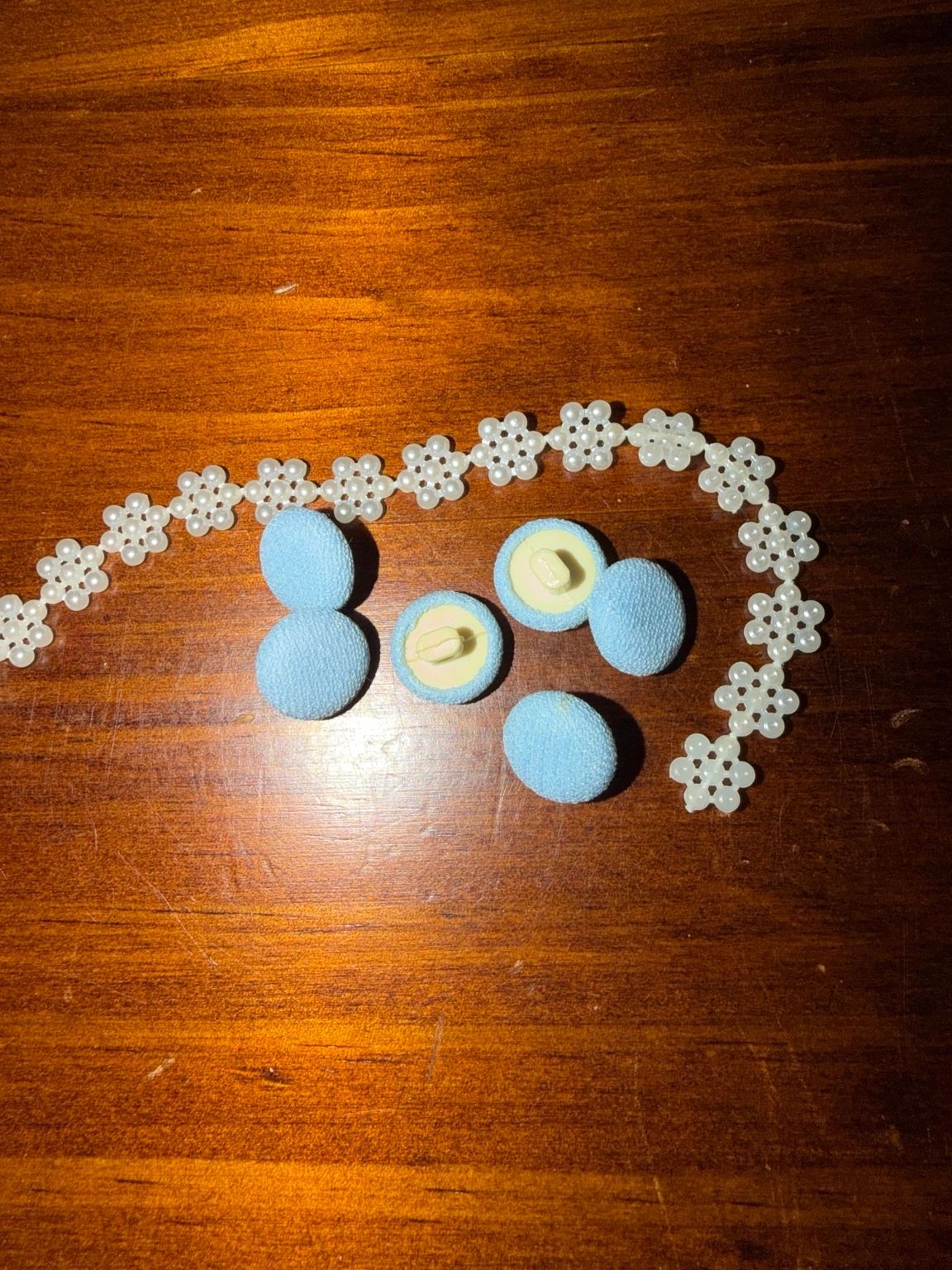
I still have some of the original pearl trim today, and this week, while going through the old button box, I found several of Mum’s original handmade buttons. I’ve included a photograph of them here — tiny surviving pieces of Athena Magic more than 30 years later.
The shoes were matched to the dress as part of the complete look, with the hat and parasol completing the ensemble — but they have stories of their own, so I’ll save those for another day.
By the time this photograph of me wearing Athena Magic was taken, the dress had already travelled around Australia and appeared on around 50 catwalks.
More than 30 years later, I still have some of the original materials, buttons, pearl trim and, of course, a lot of memories from its making.
Designed by Hand. Defined by Heritage.
#BatemanOriginalDesigns #AthenaMagic #SheilaBateman #AustralianFashionHistory #Racewear #FashionHeritage #AustralianDesign #DesignedByHandDefinedByHeritage